 Alaska Injury Law Blog
Mr. O’Donnell recently successfully concluded an insurance “bad faith” case against Allstate Insurance Company. After a two-week trial, the jury found that Allstate had failed to disclose and pay Mr. O’Donnell’s client $100,000 in Underinsured Motorist Coverage that was available from a prior class action settlement. The jury not only awarded Mr. O’Donnell’s client the underlying $100,000, but also awarded an additional $300,000 for financial distress resulting the delayed payment of the claim. The jury further found that Allstate had acted with reckless disregard of its insured’s interests. In Alaska, a jury can only hear evidence of the defendant’s financial condition, and determine the amount of a punitive damage award, after first finding that the plaintiff is entitled to an award of punitive damages. In that situation, the jury reconvenes to hear evidence of the defendant’s financial condition. The case settled here for a confidential amount the morning that the punitive damage phase of the trial was to begin with plaintiff’s CPA expert witness about to testify that Allstate made $2.4 billion last year. Mr. O’Donnell has handled, and continues to handle, numerous insurance “bad faith” cases against Allstate. The attorneys at the Alaska Personal Injury Law Group, including Mr. O’Donnell, have extensive experience with claims against insurance companies for failing to fulfill the special fiduciary duties they owe their insureds.
Articles Posted in Automobile Injuries
Trusting is Optional, Verifying is Essential


Over the years we have handled numerous “insurance bad faith” claims against auto insurers. These cases often involve situations where, following a serious auto accident, the insurance company fails to disclose and pay all the insurance coverage that is owed to the injured insured. We have seen that auto insurers often treat insureds as if they are adverse parties. They leave it up to the injured person to figure out which insurance policies apply. They leave it up to the injured insured to figure out what benefits they are entitled to under a 30-page or longer fine print contract. This approach to claims handling is both improper and illegal. Insurance companies owe their insureds an obligation of good faith and fair dealing. Alaska insurance regulations specifically require insurance companies to “fully disclose” to insureds “all relevant benefits and other provisions of coverage under which a claim may be covered.”
Determining what insurance policies and what coverages apply is often a complicated task, particularly in the event of a death or a serious injury. In a recent case, Allstate’s handling of a claim where a woman’s husband died in a head-on collision came to our attention many years after the fact. Our investigation determined that Allstate had denied underinsured motorist (UIM) coverage to the widow under a second household auto policy through a tortured and self-serving “interpretation” of the policy that the Allstate claims managers never disclosed to the widow. Indeed, Allstate never even told the widow (who was not represented by an attorney) about the possibility of coverage under this policy. After Allstate’s conduct came to light and we filed suit, the court granted summary judgment in the widow’s favor ruling that a “coverage determination based on arcane legal doctrine [followed by Allstate] is at odds with Alaska’s reasonable-lay-interpretation doctrine, which expresses clear Alaskan public policy.” The moral of the story is that unfortunately there is a need, in the event of a serious injury or death, to verify that you are actually receiving the “Good Hands” treatment your insurer promised and is required to provide as a matter of Alaska law.
Alaska Personal Injury Law Group Obtains Substantial Jury Verdict
Mr. O’Donnell recently successfully concluded a jury trial against a defendant who caused a head-on collision on the Seward Highway. The defendant was driving her vehicle while intoxicated and had allowed her vehicle to cross the centerline.
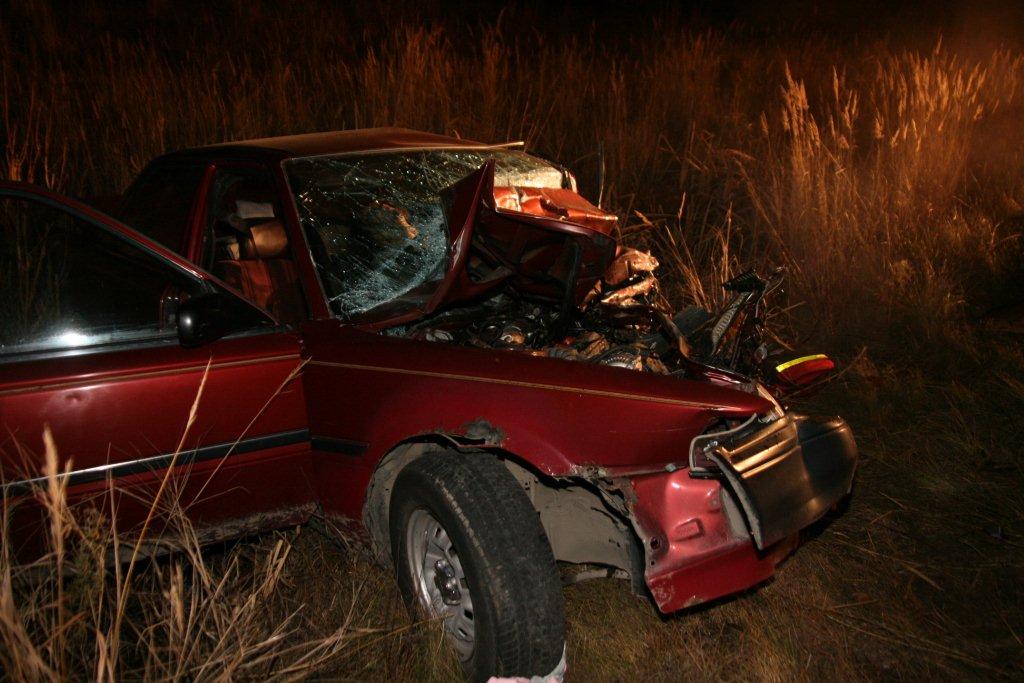
The plaintiff, a young woman, suffered extensive hip, leg and foot injuries. The jury awarded an amount in excess of the statutory limit for non-economic damages. Non-economic damages include damages for pain and suffering, loss of enjoyment of life, disfigurement, physical impairment, and inconvenience. The total judgment, including stipulated medical expenses, totaled $4.2 million.
The Alaska Personal Injury Law Group, consisting of Neil O’Donnell, Mike Moody and Rick Vollertsen, has successfully resolved, either by way of jury verdict or settlement, numerous serious automobile claims over the past three decades. Through this track record they have developed extensive experience working with the medical, engineering and economic experts needed to successfully present such claims for their full value. Such experts include accident reconstruction engineers, biomechanic engineers, rehabilitation experts and economists.
Alaska Personal Injury Law Group Appellate Victory
Congratulations to my partner Mike Moody, and his co-counsel Dennis Mestas, for their excellent work in the Ennen v. Integon Insurance case. The Alaska Supreme Court recently held in Ennen v. Integon Insurance Corp., Opinion No. 6637 (1/20/12 Alaska), that insurance companies owe a duty of good faith and fair dealing to all their insureds, not just to the individual or the business which happens to be listed as the named insured on the policy. This is a very important decision. Insurance companies are liable for damages in tort when they breach their duty of good faith and fair dealing by, for example, hiding coverages from the insured, unreasonably low-balling the value of a claim, or unreasonably delaying or denying payment of a valid claim. This cause of action is called an insurance bad faith claim. It allows the insured to recover not just what the insurance company should have paid to begin with (before years of litigation finally made them do it), but also the additional damages the insured suffered in the meantime by not having the insurance policy benefits they should have promptly received from the insurance company. If the insurance company’s improper conduct was reckless or intentional, the insurance company may also be liable for punitive damages.
In two earlier blog posts, we discussed how pervasive this type of improper claims handling is. The first post discussed the results of an 18-month investigation by CNN which concluded that many insurance companies engaged in systematic bad faith claims handling. The second post discussed an American Association for Justice Report which showed that such hardball claims tactics had gone hand-in-hand with record industry profits.
The Ennen v. Integon Indemnity decision is extremely important in light of these problems because many insurance companies (including Integon and Allstate) have taken the position that they owe no duty of good faith and fair dealing to their insureds who are not the named policy holder. A motor vehicle insurance policy typically protects many types of insureds who are not the named insured on the policy. For example, permissive drivers are covered under the liability coverage for any accidents they cause and medical payments coverage if they are injured. If they are injured by the negligence of another driver, they may be entitled to uninsured or underinsured motorist (UM/UIM) coverage. The policyholder’s spouse and other resident relatives of the named insured and guest passengers are expressly included as insureds for UM/UIM coverage. If Integon’s (and Allstate’s) position had been accepted by the Alaska Supreme Court, they would have been insulated from bad faith claims by any of these insureds. Insurers in Alaska could have hidden policy benefits from these types of insureds; delayed their claims for years; or denied their claims entirely for no valid reason and faced no penalty whatsoever. If the insurance company got caught, it would only have to pay what it should have paid to being with.
The “Prior Odds” Fallacy
One of the increasingly common arguments I see defense experts make in our automobile collision practice and our aircraft crash practice involves the misuse of statistical evidence. Defense experts have taken the prior odds of a particular type of injury occurring in a certain type of accident and then applied that same statistical probability (which is often low) to support the defense argument that it is unlikely that a particular plaintiff suffered the injury she claims she suffered as a result of the accident. The fallacy arises from the fact that the expert is applying a probability rate derived from a large population group (everyone who was involved in a particular type of accident) to a very different and much smaller population group (individuals who claim they were in fact injured in that type of accident, who received medical treatment for their claimed condition, and then subsequently hired legal counsel and filed a lawsuit to recover damages for their claimed injuries). For example, let’s assume an epidemiological study analyzes a large number of car crashes and concludes that less than 6% of vehicle occupants involved in rear impact collisions of less than 20 miles per hour had neck injuries that last more than six months. I have seen defense experts try to use this type of data to assert that it is extremely unlikely that a particular plaintiff really has the ongoing problems she claims to have because these types of symptoms usually resolve within six months. This is, however, complete statistical gibberish. The defense expert is applying the 6% statistical rate to a very different question, namely what percent of claimants who seek medical attention for their claimed continuing problems and subsequently file a lawsuit for their claimed continuing problems are really faking their injuries. The source study obviously never attempted to answer this question.
The “prior odds” statistical shell game only arises with injuries that are not objectively obvious and indisputable. A defense expert will not, for example, raise this argument where a car or aviation accident produces a compound fracture, paralysis or death. But these types of objective injuries do serve to illustrate the underlying illogic of the “prior odds” argument. Say, for example, that 6% of individuals who are involved in a vehicle rollover accident die. The forgoing defense experts are basically performing the equivalent of telling the deceased in a rollover accident that they cannot be dead because the vast majority of individuals survive rollover accidents.
Necessity is the mother of invention – in statistics as elsewhere. That is why it pays to think critically about what experts tell you, and do your research. An excellent article for further research on this subject is Forensic Epidemiology: A Systematic Approach to Probabilistic Determinations in Disputed Matters in the Journal of Forensic and Legal Medicine (2008) by Michael D. Freeman.
The Two Front War: Fighting Both The Defendant and Your Insurer
Most individuals who call our office recognize they can recover damages when they have been injured through the negligence of others. The wrongful conduct could be any number of things: drunk driving, running a stop sign, speeding, crashing a plane, marketing a defective product, creating a dangerous work environment. They understand the defendant will typically deny he was negligent. They are not surprised when the defendant next argues that even if he was negligent, the plaintiff’s problems don’t really exist, or were caused by something else, or were all pre-existing anyway. They understand that the defendant will finally argue that even if he was negligent, and even if he did cause the plaintiff’s injuries, the resulting damages are nowhere as significant as plaintiff claims. Clients expect that if they ultimately prevail over all these defenses, they have won the war. Unfortunately, this is not necessarily the case.
Over the last decade, insurers and government agencies have become much more assertive in claiming priority repayment (“subrogation”) rights from individuals who have received insurance or government benefits and subsequently recover damages in a personal injury or wrongful death lawsuit. This is a marked change from the traditional common law. Historically courts put the interests of the injured person ahead of the interests of insurance companies and government programs under what is called the “made whole” doctrine. Under the “made whole” doctrine, an injured person is entitled to be fully compensated for his loss before the health insurance company that paid plaintiff’s medical bills is entitled to be repaid those expenses out of the proceeds of a lawsuit. For example, if a jury awarded a plaintiff $50,000 for medical expenses, $50,000 in lost wages and $50,000 for impairment, pain and loss of function, but the defendant only had $100,000 in insurance and no other assets, the plaintiff would receive the entire available $100,000 under the principle that insurance is first supposed to protect the insured.
 Times have changed. Many health insurance policies and government programs have invested a great deal of effort over the past decade into re-writing policies and regulations in an attempt to abolish the “made whole” doctrine and limit other legal and equitable doctrines that place the interests of the injured person first. In general, they want to be paid first out of the funds you recover in your lawsuit, and they do not want to share any of the costs and attorney fees you incurred in producing that recovery. This has now become a very complicated area of the law. The rules that apply to one government program (Medicare) may not apply to other government programs (Medicaid, Veterans’ Benefits, Workers Compensation, etc.). The interpretation and enforcement of contractual terms in insurance policies is also subject to a set of specialized statutes, regulations and case authorities. Sometimes finding an attorney with expertise in these types of specialized “subrogation” issues is as important as finding an attorney who can handle the traditional part of your claim. Now obtaining adequate compensation in a personal injury or wrongful death lawsuit often requires fighting a “two front war.”
May is Motorcycle Awareness Month
May is a particularly perilous month for motorcycle and bicycle riders given the Alaska Personal Injury Law Group’s totally non-scientific sampling of individuals who contact our office throughout the year. After six months or more of winter, auto and truck drivers are simply not used to looking for motorcycles and bicycles. This fact shows in accident statistics, emergency room visits, and resulting claims for compensation for injuries, damaged property, and lost income. Both the number of registered motorcycles and the number of motorcycle fatalities have been increasing since 1997. In response to these statistics, the National Highway Transportation Safety Administration (NHTSA), along with state organizations such as A.B.A.T.E. of Alaska Inc., promote May as “motorcycle awareness month” with the goal of “sharing the road with motorcycles.” Motorcycles obviously have a much smaller profile than a vehicle, which can make it more difficult to judge the speed and distance of an approaching motorcycle. The initiative’s key safety messages include that: motorcycles have the same rights and privileges as any other motor vehicle, motorists should expect to see motorcycles at any time and search aggressively for them, and motorcycles are entitle to a full lane width to safely maneuver. Obviously when an accident occurs, the motorcycle and its rider are at a distinct disadvantage. NHTSA statistics report that in fatal motorcycle/automobile collisions, 98% of the fatalities were motorcycle riders and only 2% were passenger vehicle occupants. So share the road!
Highway Traffic Deaths Continue to Fall
The National Highway Traffic Safety Administration (NHTSA) estimates that 32,788 people died in traffic accidents in the United States in 2010, the lowest number of motor vehicle related deaths since 1949. This is a remarkable achievement given that the population of the United States more than doubled between 1949 (149 million) and 2011 (311 million). The largest regional decrease in deaths from motor vehicle collisions from 2009 to 2010 (- 12%) was in the Northwest Region which includes Alaska. NHTSA has not yet released individual state statistics for 2010. NHTSA attributes the continuing decline in the number of crash-related deaths and serious injuries to various factors including increased seat belt use, anti-drunk driving campaigns, stricter drunk driving laws, graduated driver’s licenses, improved air bags, and safer road designs. See NHTSA Early Estimate of Motor Vehicle Traffic Fatalities in 2010,http://www-nrd.nhtsa.dot.gov/Pubs/811451.pdf
Poor Economy Has Important Ramifications for Personal Injury Claims
Individuals who are severely or catastrophically injured must assert a one-time claim for all the economic losses they will experience over their remaining life expectancy on account of their injury. An injured person only gets one trial. The injured individual cannot go back to court in 5, 10 or 15 years because the assumptions that were used in his or her economic loss analysis proved too optimistic. This is a particularly important issue given the present economic downturn. Many statistics which economists have traditionally relied on to calculate economic loss have limited or diminished relevance today. For example, historical statistics concerning the availability of alternative work, and prevailing wages for such work, now overstate the opportunities that are actually available to an injured person in today’s economy. In addition, just focusing on the most recent economic data does not necessarily solve this problem. The traditional measure of unemployment does not include discouraged workers who are no longer actively looking for work, thus substantially overstating the actual health of the labor market. A final example involves historical statistics concerning work-life expectancy. An economist will typically project a severely or catastrophically injured person’s earnings over their statistical work-life expectancy. However, for numerous reasons, the historical data now underestimates the likely work-life expectancy of current workers. Work-life expectancy is now likely to be significantly longer than historical averages because of factors including (1) reduced and/or depleted retirement savings, (2) declining percentages of individuals with fixed pensions, and (3) the cost or complete unavailability of non-employer-sponsored health care coverage which causes individuals to work longer. The bottom line is that severely or catastrophically injured individuals need to hire counsel who are familiar with recent economic trends and who regularly work with economists are knowledgeable and current on issues affecting serious personal injury claims. See Employee Benefit Research Institute, 2010 Retirement Confidence Survey http://www.ebri.org/pdf/briefspdf/EBRI_IB_03-2010_No340_2010_RCS.pdf
Highway Deaths at Lowest Level in Nearly 60 Years
The National Highway Transportation Administration (NHTSA) recently reported that the number of people killed in motor vehicle collisions dropped to 33,808 in 2009. This is the lowest number of annual motor vehicle deaths since 1950, a time when the population of the United States was only half of today’s population of 305 million. The highest number of fatalities occurred in 1973 – three years after the creation of NHTSA – when approximately 54,000 people died in motor vehicle accidents. The estimated number of people injured in car crashes is also at its lowest level since NHTSA began tracking that statistic in 1988. The dramatic improvement in fatality and injury rates is the result of improvements in the crashworthiness of cars and pickup trucks; improved road design; and aggressive campaigns against drunk and impaired driving. Unfortunately, Alaska was one of only nine states to see an increase in vehicle deaths in 2009, from 62 deaths in 2008 to 64 deaths in 2009. However, primarily due to Alaska’s small population, Alaska also had the lowest number of motor vehicle deaths of any state in 2009. After Alaska, the states with the lowest number of motor vehicle fatalities in 2009 were Rhode Island (65), Vermont (73), North Dakota (104), Hawaii (107), South Dakota (121), and Delaware (121).